It works, it just doesn’t have the same goals as coercive parenting (CP).
If your goal is obedience, then it might feel like RP doesn’t “work.” You might be trying to use a RP method to achieve a CP goal.
Your methods may be aligned with Responsive Parenting but are your goals also aligned? I find it’s really hard to do one without having the other. Same as if you have RP goals but not RP methods (that’s probably more my struggle). Either way, we’re always working towards aligning our goals and methods.
A great example is when a parent says
“I validate all their feelings but then the tantrum just continues.”
Or
“I want to validate my child’s feelings, I want to hold space, but I get so frustrated.”
One parent is hoping the validation will stop the behaviour. The other is wanting to validate the behaviour but struggling with their own nervous system. You know what’s interesting? They’re both experiencing the same thing, from a nervous system point of view. They are both activated and in sympathetic, feeling the need to flee or fight.
In regards to safety boundaries, the RP perspective is it’s the adult’s job to protect their child from harm and not the child’s job to be obedient in order to avoid getting hurt.
Why? It’s a much more effective plan than relying on the obedience of a child. No we don’t put them in a plastic bubble. Risk taking is important but we also don’t rely on their ability to be obedient to keep them safe.
Responsive Parenting is not simply using gentler words and methods, with the same goals as coercive parenting. It’s seeing childhood and your parenting role, from a different perspective. Without that shift in perspective, you may find yourself confused and frustrated, a lot of the time.
Remember that Responsive Parenting is a choice. I’m not trying to convince you to practice it. If you do feel drawn to this way of seeing childhood, I encourage you to look at more than just what you can say or do differently. Look at how you can think differently about your child and your role as a parent. When we do the thinking before the doing, the doing makes a lot more sense.
Coercive Parenting vs. Responsive Parenting
CP is based on correcting behaviour.
RP is about understanding behaviour.
CP is about training a child to meet the adults needs.
RP is about adapting to the child’s needs.
CP uses fear as a motivator.
RP uses connection and empathy as a motivator.
CP sees a child as someone with a set of behaviours that need to be corrected in order to create a person who fits easily into society.
RP sees the child as a whole being, perfect and complete, just as they are; and in need of support, in order to flourish and grow into the person they want to be.
CP values conformity and obedience above all.
RP sees authenticity and empathy as the true catalysts for intrinsic motivation.
Not excuses for using coercive parenting methods
- “There is no one size fits all approach” is not an excuse to mistreat children in order to get them to obey.
- “This doesn’t work with neurodivergent kids,” is not an excuse to treat your child with less respect than you would a neurotypical child.
- “My child doesn’t understand emotions” is not an excuse for disregarding your child’s emotions.
- “I don’t have any support” is not an excuse to take your stress out on your child.
- “My child can’t talk, so they can’t tell me what they want” is not an excuse to make assumptions about your child’s competence and consent.
“Coercive control, as a parenting strategy, has a shelf-life.” J. Milburn
It is true that fear is a strong motivator but it is a temporary one. Why? Because, as humans, we tend to overcome fear. We have survival mechanisms in place that help us to survive and become more able to respond to that fear next time. All these instincts come at a price. For ourselves, but also for those who try to use fear to control us. Once we overcome the fear, they no longer have control. The level of terror must increase to elicit that same fear response.
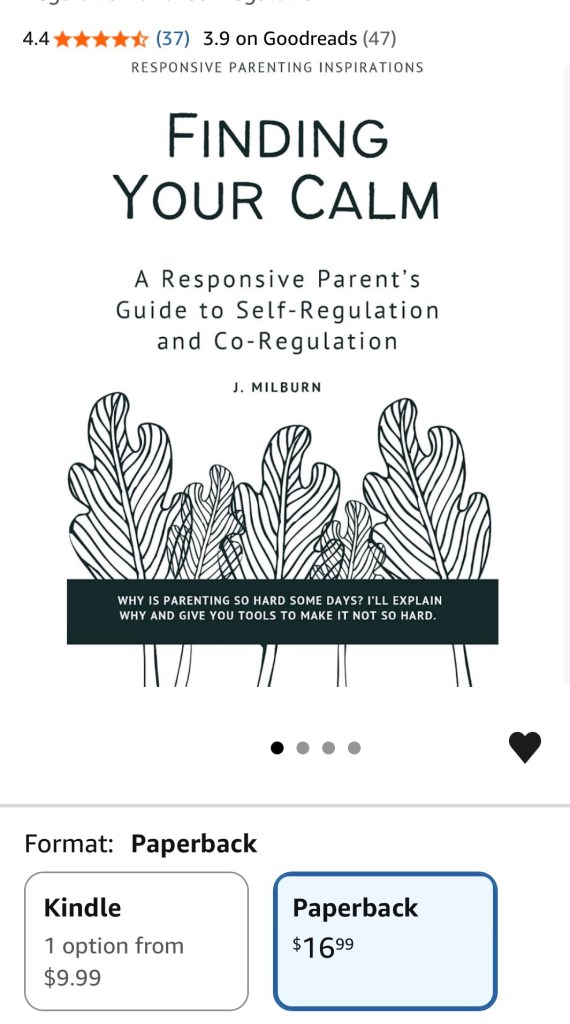
Fear is never love. If someone is afraid of you, they either don’t feel loved by you or even worse, they’ve learned that they should fear those who love them.
That fear and love are one.
But let’s get honest here… were you raised that way? That
fear = respect = love
But the message really is
fear + obedience = worthy of love
But that’s not love….
A child who feels fear in their home is not feeling loved.
They aren’t feeling safe.
They aren’t feeling a sense of belonging.
Did you feel safe in your home as a child?
Do you know how it feels to be loved unconditionally?
Outdated parenting strategies that do more harm than good
- Threats
- Spanking
- Time-outs
- Rewards
- Public embarrassment
- Yelling
- Shaming
- Telling a child to “grow up”
- Forcing children to share
- Counting to 3
- Sleep training
- Toilet Training
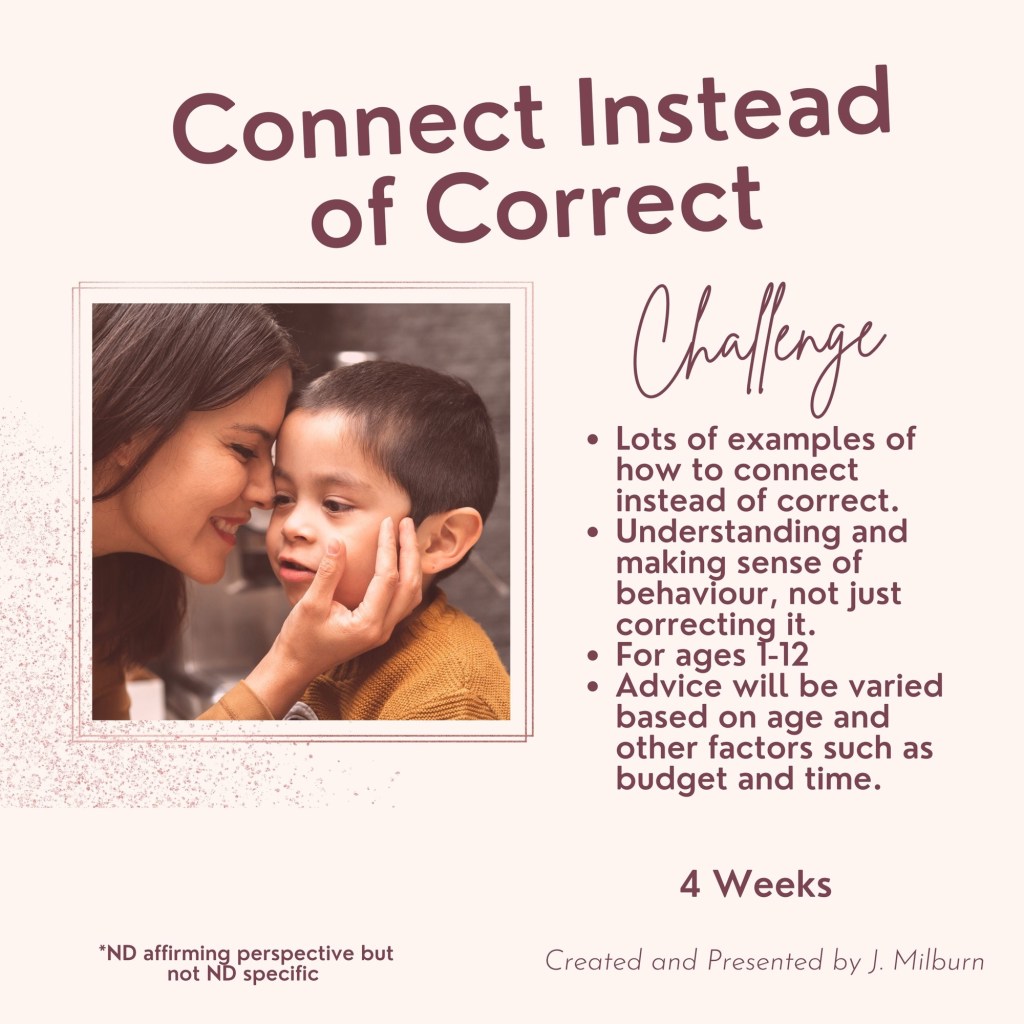
Have you tried the Connect Instead of Correct Challenge?
Some topics covered
- Bedtime
- Getting ready in the morning
- Out in public (public dysregulation, material wants, impatience, incentives vs. rewards)
- Mealtimes
- Messes
- Aggression
- “Rude” behaviour
- Safety concerns
And so much more…
I also explain the “why” behind all this, including a lot of links to research and additional resources to support your learning. Even if you aren’t ready for the challenge, the book will help you understand this approach in a way I just can’t teach via IG.
Take the Connect Instead of Correct Challenge!
4 weeks to a more connected relationship with your child
Week 1: Try not to correct for a week
Week 2: Replace correction with connection
Week 3: Reflect on the times your were able to be more connected.
Week 4: “Yes Day” (child-led, yes day) and reflection.
For ages 1-12
Available as a book too

