
Scary moment when another parent confronts you because your child hurt their child. We’re going to make the assumption that the aggression has ended, if your child is still hurting another child, go stop that before you talk to the parent and child.
- Be genuinely empathetic and apologetic
- Stay calm
- Keep it light and friendly
I would say something like “She pushed your daughter? Oh I’m so sorry, is she ok?” Then I would say “I’m just going to go have a little chat with her.”
Then I would take my child aside, where no one can hear us. I would get down to her level and say “This mommy here is saying you pushed her daughter, what happened?”
Child “She wouldn’t let me on the slide! It was my turn!”
Me: “Oh that is really frustrating. Is it ok to push when you’re frustrated?”
Child: “No but she wouldn’t move!”
Me: “Well that is a challenge. Is there a safe way you could have dealt with this challenge? Because you know pushing is not safe, especially at the top of a slide where someone can fall and get hurt.”
Child: “No! I had to push her!”
Me: “Yeah I can see why you felt that way. Did you try calling my name first for help?Because I happen to be really good at managing slide disputes.”
Child: “No.”
Me: “So maybe next time try calling me first to help. I’ll make sure you get your turn on the slide.”
Child: “ok.”

Me: “How is your friend doing now? Is she ok? Do you want to play with her again or are you done for the day? Because if you want to play with her again, she might Iike to hear a sorry.”
Child: “yeah I’ll go say sorry.”
Then I would escort them over to the other children and parent. Give them space to say their own sorry.
Then I might say “we talked about what we can do about traffic jams at the slide. She’s going to call for help instead of pushing from now on.”

Now what if they chose to be done for the day?
Then I would go up to the parent and say “yeah, so she says there was a bit of a traffic jam at the slide and you know, she got frustrated and pushed. Again, I’m so sorry. I reminded her to call me first to help her in the future. I think right now she just wants some space.”
Then I would monitor my child more closely because they are showing that they are becoming dysregulated, which is harder to spot, at the park. If they became aggressive again, I would leave the park.
Having all the right gear can help with parenting at the park. Come prepared and you’ll be ready for anything. Here’s a list of my favourite gear for on-the-go.
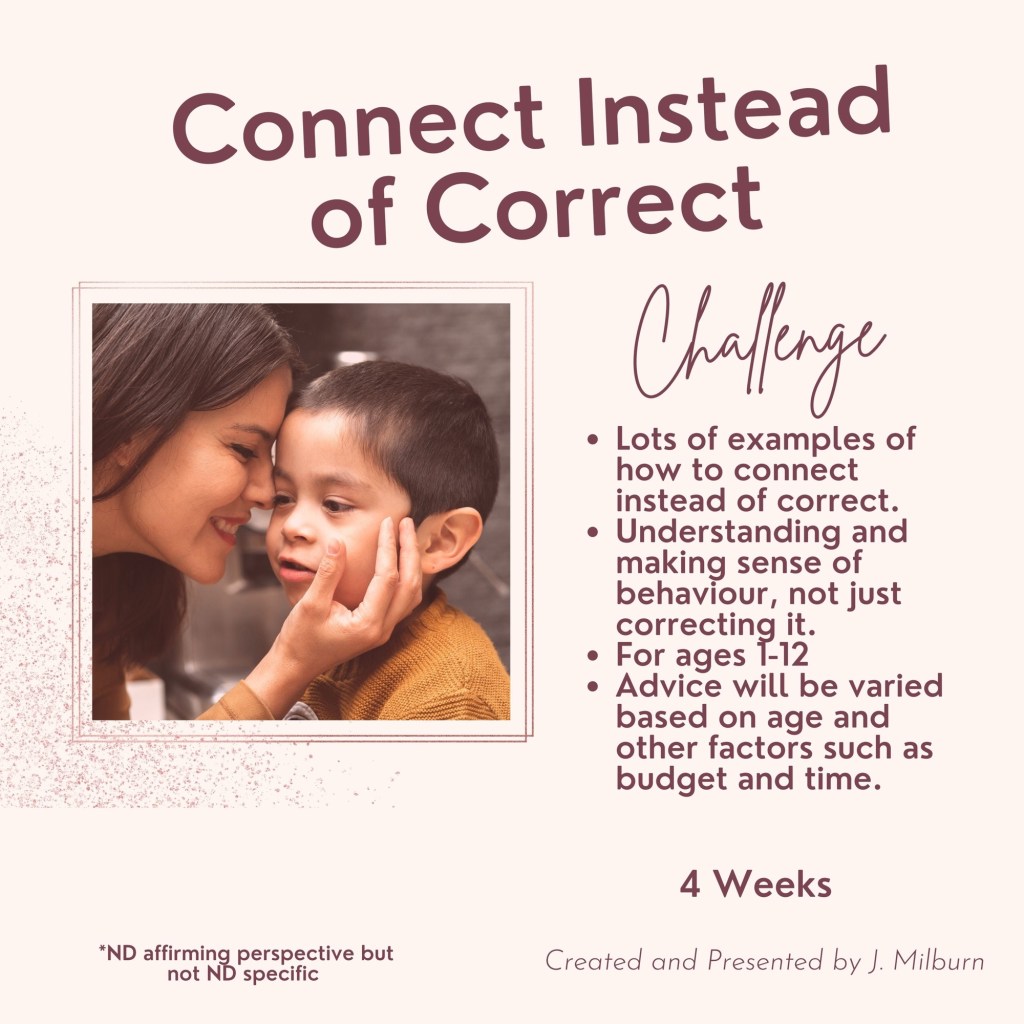
Have you tried the Connect Instead of Correct Challenge?
Some topics covered
- Bedtime
- Getting ready in the morning
- Out in public (public dysregulation, material wants, impatience, incentives vs. rewards)
- Mealtimes
- Messes
- Aggression
- “Rude” behaviour
- Safety concerns
And so much more…
I also explain the “why” behind all this, including a lot of links to research and additional resources to support your learning. Even if you aren’t ready for the challenge, the book will help you understand this approach in a way I just can’t teach via IG.
Take the Connect Instead of Correct Challenge!
4 weeks to a more connected relationship with your child
Week 1: Try not to correct for a week
Week 2: Replace correction with connection
Week 3: Reflect on the times your were able to be more connected.
Week 4: “Yes Day” (child-led, yes day) and reflection.
For ages 1-12
Also available as a book: https://amzn.to/4me2mIO

